Tag :Application
Time :2026-5-15
Core Insights:
> Explosive market growth: PTZ cameras emerge as a new growth engine, while classic action cameras underpin sales volume
> Complicated competitive landscape: Smartphone makers enter cross-border, ushering the market into a new phase of competition
> Clear technology innovation trends: Square sensors gain popularity, customized services meet diverse demands
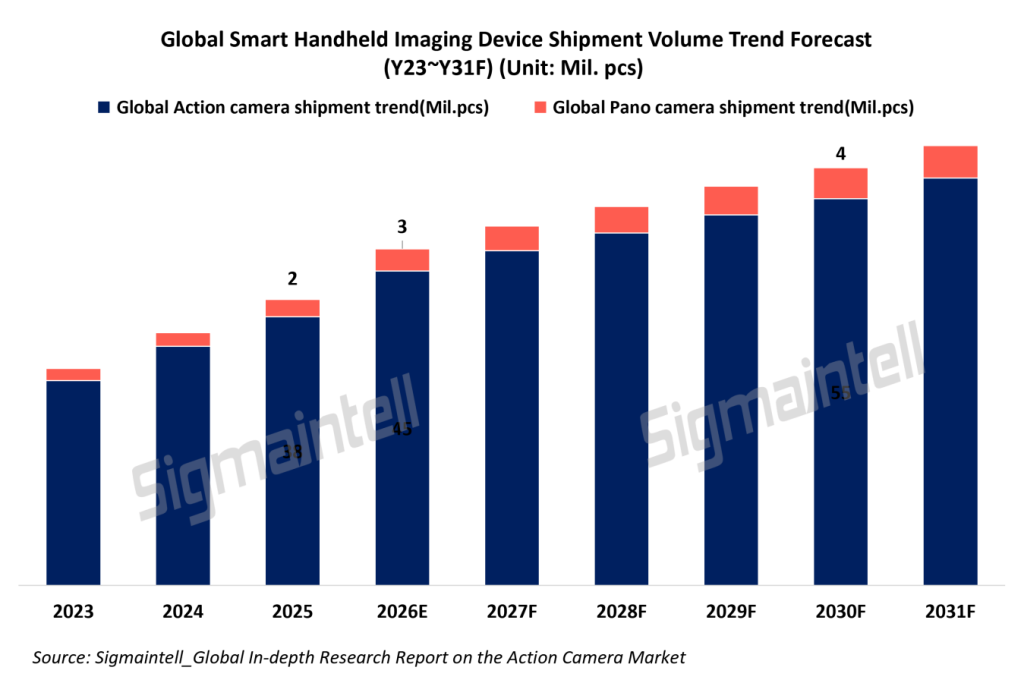
From bulky early cameras to today’s lightweight Smart Handheld Imaging Devices, technological advances are redefining how we capture the world. Data shows the global market size of Smart Handheld Imaging Devices will grow from 29.12 million units in 2023 to 57.90 million units in 2031, representing a CAGR of 9.1% and demonstrating robust market vitality. The sector is embracing unprecedented development opportunities.
Explosive Market Growth: PTZ Cameras Lead Expansion, Classic Action Cameras Secure Stable Base
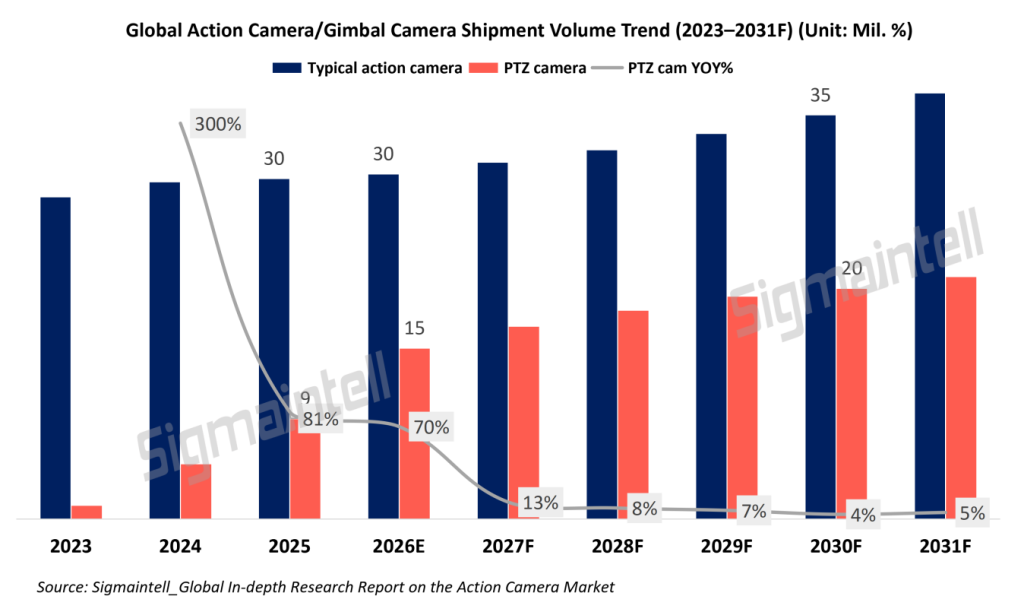
According to Sigmaintell’s Global Action Camera Market In-Depth Research Report, PTZ camera shipments have surged 16 times in three years, becoming the core growth driver of the Smart Handheld Imaging Device market. Global PTZ camera shipments stood at 1.2 million units in 2023 and are projected to reach 14.8 million units in 2026, representing an over 16-fold increase in three years. This boom is driven by surging consumer demand for high-quality mobile imaging.
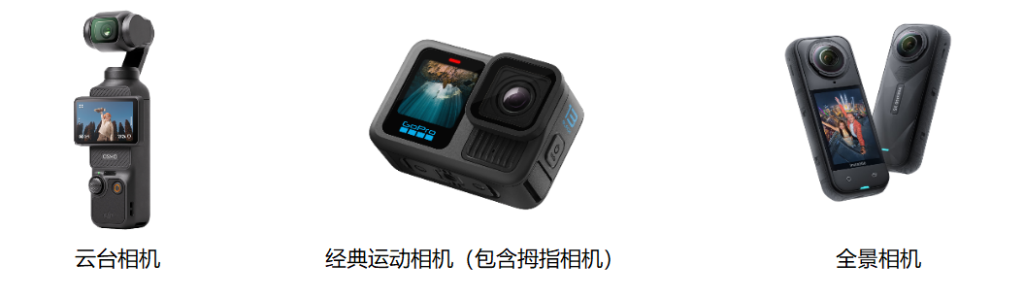
As the market’s cornerstone, classic action cameras maintain strong stability. Global classic action camera shipments reached 27.92 million units in 2023 and are forecast to rise to 36.90 million units by 2031, with a CAGR of 3.6%. Despite slower growth than PTZ cameras, classic action cameras dominate the market with mature technologies, a rich accessory ecosystem, and a broad user base, providing a solid foundation for the entire sector.
Market Structure Shift
The share of PTZ cameras is rising rapidly:
>Accounted for only 4.1% of the total action camera market in 2023
>Expected to exceed 20% (22.8%) in 2025
>Stabilize at around 36.3% by 2031
This shift indicates the market is evolving from single-product-driven to multi-product collaborative development, forming a pattern where classic and innovative products coexist.
Key Growth Drivers
>Consumption upgrading: Consumers are willing to pay a premium for higher-quality imaging devices
>Booming content creation platforms: Spurring demand from professional creators and enthusiasts
>Technological progress: Enriching functions and expanding application scenarios of Smart Handheld Imaging Devices
Complicated Competitive Landscape: Smartphone Makers Enter Cross-Border
The market is traditionally led by established camera manufacturers, with a relatively stable structure:
Industry leaders: DJI, Insta360, GoPro hold key positions in classic action cameras; DJI boasts profound PTZ technology and its acclaimed Pocket series PTZ cameras
Other players: Ricoh, Panasonic, and a batch of emerging Chinese brands
As market potential unfolds, the monopoly of traditional camera makers is being broken. Major Chinese smartphone brands OPPO and vivo have announced plans to develop PTZ camera products, with launches expected within this year, marking the official entry of smartphone manufacturers into this segment.
Impacts of Smartphone Makers’ Entry
1.Strong brand influence and extensive sales channels to rapidly boost market penetration
2.Advanced expertise in image-processing algorithms, AI, and battery technologies to accelerate product innovation
3.Superior cost control and supply chain capabilities that may reshape the market’s pricing system
Competition will shift from pure hardware parameter rivalry to comprehensive competition in software ecosystems, user experience, and brand services. Deeper integration between Smart Handheld Imaging Devices and smartphones is expected, forming a “smartphone + professional imaging device” ecosystem to deliver complete imaging solutions. This transition will ultimately benefit consumers and drive industry-wide technological advancement and product upgrading.
Clear Technology Innovation: Square Sensors Gain Popularity, Customized Services Prevail
Square image sensors are becoming the preferred solution for action cameras and Pano cameras due to their unique advantages. Traditional rectangular sensors cause cropping, especially in panoramic and multi-angle shooting, leading to information loss; square sensors effectively resolve this issue to deliver complete frame data.
Core Advantages of Square Sensors
1.Higher frame utilization in panoramic shooting, reducing cropping and capturing more scene details
2.Support multi-angle shooting and post-cropping, enabling flexible horizontal/vertical framing for various platform publishing
3.Deliver more stable video quality by minimizing distortion caused by sensor shape limitations
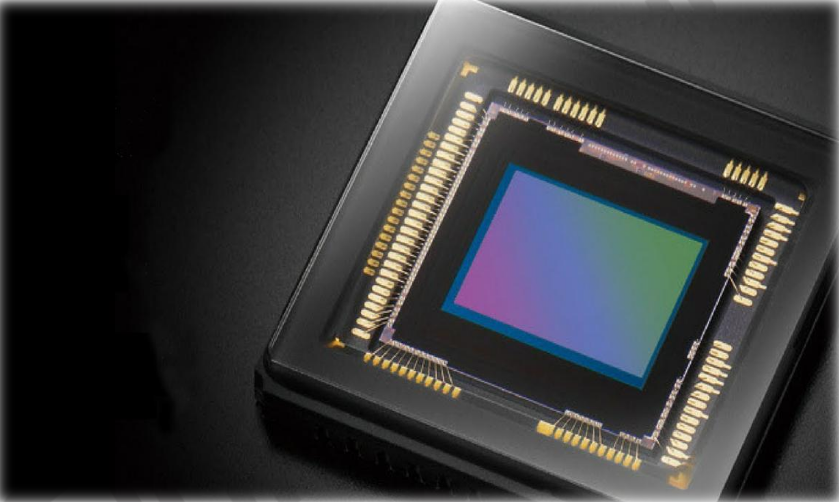
Sensor suppliers are actively providing customized square sensor services to upgrade technologies:
Leading vendors including Sony, Samsung, OmniVision have launched square sensor customizationTailored parameters (size, pixels, sensitivity, power consumption) to deliver optimized solutions for products at different positioning
With AI development, square sensors will integrate more deeply with AI algorithms. Future Smart Handheld Imaging Devices will analyze scenes in real time via AI and auto-adjust sensor parameters for smarter shooting, further enhancing user experience and expanding application scenarios.
Conclusion
Smart Handheld Imaging Devices are in a golden era of rapid development, featuring expanding market size, continuous technological innovation, and an increasingly diverse competitive landscape.
>PTZ cameras will sustain explosive growth to drive the overall market, while classic action cameras maintain steady expansion, jointly boosting market scale.
>Wide adoption of square sensors will be a major trend in the coming years, improving imaging quality, expanding applications, and satisfying personalized user demands.
>Cross-border entry of smartphone makers will inject new vitality and innovative ideas, propelling industry-wide technological progress and product upgrading.
For consumers, this means more high-quality, cost-effective choices. For the industry, it represents greater market space and more development opportunities. Smart Handheld Imaging Devices are moving from professional use to the mass market, evolving from functional tools to life companions, and opening a new era of visual recording.